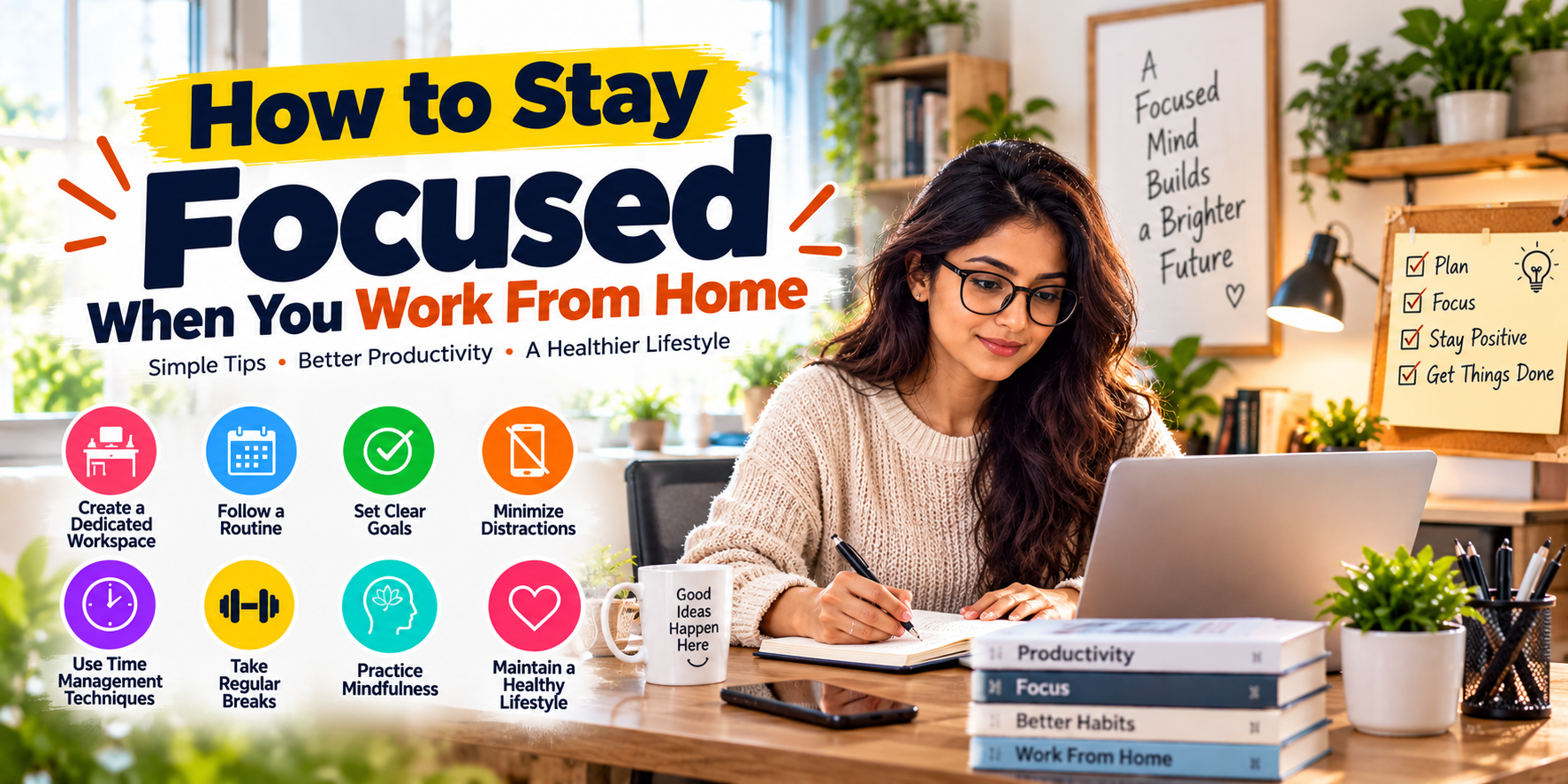
How to Stay Focused When You Work From Home: 12 Practical Tips
Working from home gives you flexibility, saves commuting time and allows you to create a comfortable working environment. However, staying productive at home can sometimes be more difficult than working in a traditional office.
Household chores, social media, phone notifications, family members, television and even the temptation to take an unplanned nap can quickly affect your concentration.
If you are wondering how to stay focused when you work from home, the solution is not necessarily to work longer hours. Instead, creating the right environment, following a consistent routine and managing distractions can help you get more done in less time.
Why Is It Difficult to Stay Focused While Working From Home?
Working from home removes many of the natural boundaries that exist in an office. At home, your workspace may be only a few steps away from your kitchen, television or bedroom.
Remote workers may also experience frequent interruptions, unclear working hours and difficulty separating professional responsibilities from personal life.
The good news is that these challenges can be managed by creating simple habits and a structured work routine.
1. Create a Dedicated Workspace
One of the most effective ways to improve concentration is to create a dedicated workspace.
You do not need an expensive home office. A desk, comfortable chair, adequate lighting and an organized setup can be enough.
Try to use the same location whenever you work. Over time, your brain can begin associating that space with work and concentration.
- Keep your desk clean and organized.
- Use comfortable lighting.
- Keep essential work items nearby.
- Avoid working from your bed whenever possible.
2. Start Your Day With a Routine
A consistent morning routine can help you transition from personal time into work mode.
Wake up at a regular time, get ready, have breakfast and begin work according to a planned schedule instead of starting whenever you feel like it.
Your routine does not need to be complicated. Even a simple 20- to 30-minute preparation period can create a clear mental boundary between home life and work.
3. Set Your Top Priorities Before Starting Work
One of the biggest productivity mistakes is beginning the day without knowing what needs to be accomplished.
At the beginning of your workday, identify three to five important tasks. Put the most important task first and work on it when your energy and concentration are at their best.
- Write down your main tasks.
- Prioritize urgent and important work.
- Break large projects into smaller steps.
- Set realistic deadlines.
4. Put Your Phone Away
Your smartphone can be one of the biggest sources of distraction when working from home.
Even a quick check of social media or messaging apps can turn into several minutes of lost productivity.
During focused work sessions, keep your phone away from your desk or enable Do Not Disturb mode. Keep only essential notifications enabled.
5. Turn Off Unnecessary Notifications
Computer notifications, emails, messaging apps and social media alerts can constantly interrupt your concentration.
Disable notifications that are not important for your work. If your job allows it, check email and messages at scheduled times instead of responding to every notification immediately.
6. Try the Pomodoro Technique
The Pomodoro Technique is a simple time-management approach that divides work into focused sessions followed by short breaks.
A common approach is to work for around 25 minutes and then take a short break. After several sessions, you can take a longer break.
You can also customize the timing. For example, some people may prefer 45–50 minutes of focused work followed by a 10-minute break.
The important idea is to create a defined period where you focus on one task without unnecessary interruptions.
7. Avoid Multitasking
Working on multiple tasks at the same time can make it difficult to concentrate on any one of them.
Instead, try single-tasking. Focus on one important activity and move to the next task once you reach a natural stopping point.
This can be particularly helpful when working on writing, coding, research, design or other tasks that require deep concentration.
8. Take Regular Breaks
Staying focused does not mean sitting in front of your computer for hours without moving.
Short breaks can help you reset and return to your work with better concentration.
During a break, stand up, stretch, walk around, drink water or briefly step outside. Try not to replace every work break with social media scrolling.
9. Set Boundaries With Family and Housemates
When you work from home, people around you may not always realize that you are working.
Clearly communicate your working hours and let family members or housemates know when you should not be interrupted unless something is important.
If possible, use a closed door, headphones or another simple signal to indicate that you are in a focused work session.
10. Use Time Blocking
Time blocking involves assigning specific periods of the day to particular activities.
For example, you might reserve the morning for deep work, early afternoon for meetings and later afternoon for emails and administrative tasks.
| Time | Activity |
|---|---|
| 9:00 AM – 11:00 AM | Focused work |
| 11:00 AM – 11:15 AM | Break |
| 11:15 AM – 1:00 PM | Important projects |
| 1:00 PM – 2:00 PM | Lunch and rest |
| 2:00 PM – 4:00 PM | Meetings and collaboration |
| 4:00 PM – 4:15 PM | Break |
| 4:15 PM – 5:30 PM | Emails and remaining tasks |
| 5:30 PM – 6:00 PM | Review and plan tomorrow |
11. Keep Your Workday Separate From Personal Time
One of the biggest challenges of remote work is knowing when to stop working.
Without a clear end to the workday, it is easy to continue checking emails and completing tasks late into the evening.
Create a simple end-of-day routine. Finish your important tasks, review tomorrow’s priorities, close your laptop and leave your workspace.
This helps create a healthier separation between professional and personal time.
12. Take Care of Your Energy
Productivity is not only about managing your schedule. Your physical and mental energy can also influence your ability to concentrate.
- Get enough sleep.
- Drink enough water.
- Take movement breaks.
- Eat balanced meals.
- Spend some time away from screens.
- Make time for relaxation after work.
A sustainable work-from-home routine should help you stay productive without constantly feeling exhausted.
How to Deal With Common Work-From-Home Distractions
Social Media
Use app limits, website blockers or simply keep social media closed during focused work sessions.
Household Chores
Try completing essential chores before or after your workday rather than constantly interrupting work to handle them.
Family Interruptions
Communicate your working schedule clearly and establish specific times when you are available for conversations or household matters.
Noise
Headphones, background noise or a quieter room can help if your home environment is noisy.
Lack of Motivation
When motivation is low, start with a small task. Completing one simple task can make it easier to build momentum.
Simple Work-From-Home Productivity Checklist
- ☐ Start work at a consistent time
- ☐ Clean your workspace
- ☐ Identify your top three priorities
- ☐ Put your phone away during focused work
- ☐ Disable unnecessary notifications
- ☐ Work in focused sessions
- ☐ Take regular breaks
- ☐ Stay hydrated
- ☐ Avoid unnecessary multitasking
- ☐ Finish work at a defined time
Final Thoughts
Learning how to stay focused when you work from home does not require an extreme productivity routine. Small changes can make a significant difference.
Create a dedicated workspace, establish a routine, set clear priorities, remove unnecessary distractions and take regular breaks. Most importantly, create boundaries between your work and personal life.
Remember that productivity is not about being busy every minute of the day. It is about focusing your time and energy on the work that matters most.
Start with two or three of these habits today and gradually build a work-from-home routine that works for you.