Why Indian Web Series Are Changing the Way We Tell Stories
For decades, Indian television has relied heavily on familiar storytelling formulas. Family conflicts, dramatic confrontations, rigid gender roles, and recurring domestic disputes have dominated many popular serials. Although these shows continue to attract loyal audiences, they have also left room for a different kind of entertainment—one that explores contemporary life, questions social conventions, and presents characters who feel closer to reality.
Enter the world of Indian web series. By bringing stories to digital platforms, creators have gained new opportunities to experiment with subjects, characters, and storytelling styles that may not always fit the conventions of traditional television.
A New Space for Creative Freedom
One of the most significant contributions of web series has been the opportunity to tell stories outside familiar television formulas. Digital storytelling has made space for unconventional characters, complicated relationships, uncomfortable questions, and perspectives that have often received limited attention in mainstream entertainment.
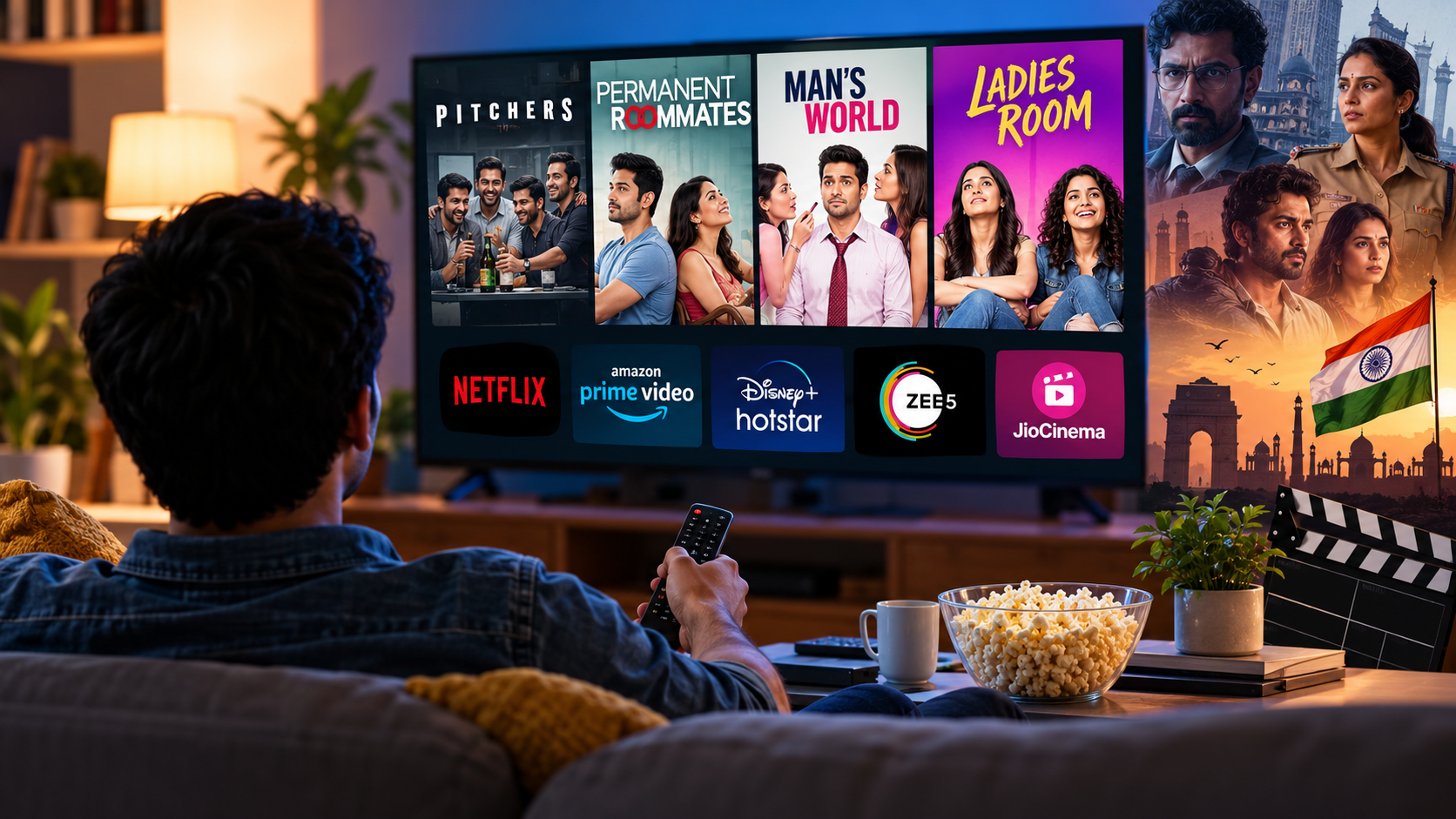
Consider Man’s World, a web series released by Y-Films in 2015. The series follows a misogynistic man who wakes up in a world dominated by women. By reversing familiar gender dynamics, it encourages viewers to examine everyday sexism from an unfamiliar perspective.
Rather than simply presenting a social message, the series uses humour and an imaginative premise to question assumptions about gender, privilege, and equality. Its approach illustrates how a web series can make a serious subject accessible without relying on the conventions of a traditional television drama.
This creative freedom does not mean that every digital production is original or socially progressive. Web series can repeat familiar clichés, too. However, digital platforms have expanded the range of stories that creators can attempt and audiences can discover.
Questioning Society’s Expectations
Entertainment does more than help us pass the time. It also influences how we think about relationships, family, identity, and the choices people make. When a story presents only one acceptable way to live, it can reinforce social expectations rather than encourage viewers to question them.
Indian web series have increasingly explored relationships and lifestyles that do not always fit conventional ideas of respectability. Live-in relationships, unconventional marriages, changing attitudes towards commitment, and the pressures of urban life have all become subjects of digital storytelling.
Permanent Roommates, which began in 2014, is an early example of this shift. The series follows a couple navigating commitment, relationships, and the possibility of marriage. Its premise reflects the dilemmas faced by young adults who are trying to reconcile personal choices with family expectations and social traditions.
What makes such stories valuable is not necessarily that they offer a perfect solution to every problem. Instead, they allow audiences to encounter different perspectives and consider why people make choices that may differ from their own.
Stories That Reflect the Realities of Young India
The experiences of young Indians cannot be reduced to a single narrative. Career uncertainty, entrepreneurship, friendship, relationships, financial pressure, and the search for independence shape people’s lives in different ways. Stories that acknowledge these experiences can feel more immediate and relatable than plots built entirely around exaggerated misunderstandings.
TVF Pitchers, for example, brought the challenges of entrepreneurship and startup culture into the world of Indian web entertainment. Its characters struggle with professional uncertainty, ambitious plans, and the personal costs of pursuing an idea. The series helped make the startup journey an engaging subject for viewers who might otherwise encounter it mainly through business news or motivational narratives.
Similarly, Y-Films’ Ladies Room explored friendship and the unpredictable experiences of two young women through a distinctive comedic format. Rather than placing its characters in a conventional family drama, it focused on their friendship, everyday adventures, and the awkward situations of growing up.
These examples demonstrate that relatable storytelling does not require every character to be admirable or every ending to be satisfying. Sometimes, a believable contradiction or an uncomfortable decision can reveal more about human nature than a perfectly resolved plot.
Humour as a Way to Explore Serious Issues
Comedy is often dismissed as a form of escapism, but it can also be an effective way to discuss subjects that people find difficult to confront directly. By using humour, creators can challenge stereotypes, expose contradictions, and encourage audiences to reconsider their assumptions.
Man’s World uses an imaginative reversal of gender roles to question sexism, while Ladies Room approaches friendship and young adulthood through irreverent comedy. Both illustrate how an unconventional format can make room for perspectives that deserve greater visibility.
Not every series needs to deliver a social lesson, of course. Entertainment can be valuable simply because it makes people laugh, offers an escape, or introduces them to an unfamiliar world. The important point is that digital storytelling allows comedy, drama, satire, and social commentary to coexist in different ways.
From Early Web Series to a Vast OTT Landscape
The early success of Indian web series helped demonstrate that audiences were willing to discover stories beyond traditional television schedules. Since then, online entertainment has grown into a much broader ecosystem, encompassing streaming platforms, independent productions, regional-language series, documentaries, and a variety of short-form video formats.
According to The Ormax OTT Audience Report 2026, India’s online video audience was estimated at 664.9 million people. This figure includes people who watched online video at least once during the preceding month, rather than only paying subscribers. The scale of this audience illustrates the importance of digital video in India’s changing entertainment habits.
However, a large audience does not automatically guarantee creative diversity. Ormax Media’s analysis of Indian streaming originals reported that the number of originals released across major OTT platforms declined by 13% in 2025, following a decline in 2024. These figures suggest that the industry is evolving, but the availability of new original productions should not be confused with the quality or variety of storytelling.
For creators, the challenge is no longer simply to put a story online. It is to offer something worth watching: a distinctive perspective, believable characters, thoughtful writing, or an experience that audiences cannot easily find elsewhere.
Are Web Series More Realistic Than Television?
It would be unfair to suggest that every web series is realistic or that traditional television has nothing meaningful to offer. Indian television has produced memorable characters and stories that resonate deeply with viewers. Likewise, some digital productions rely on sensationalism, predictable plots, or exaggerated depictions of violence and relationships.
The more meaningful difference lies in the range of possibilities. Digital platforms can give creators greater flexibility in episode length, narrative structure, subject matter, and intended audience. They can also provide opportunities for stories centred on experiences that do not always receive sustained attention in mainstream programming.
Realism, therefore, is not simply about using everyday language or setting a story in a familiar city. It comes from understanding why people behave as they do, recognising the complexity of their circumstances, and resisting the temptation to reduce every conflict to an obvious hero and villain.
The Future of Indian Digital Storytelling
Indian web series have helped expand the boundaries of popular entertainment by making room for new voices, unconventional relationships, social commentary, and stories about the uncertainties of modern life. Their contribution is not that they have replaced traditional television, but that they have given audiences more ways to experience and interpret the world around them.
The next stage of digital entertainment will depend on more than audience numbers or the arrival of new streaming platforms. It will depend on the willingness of writers, directors, and producers to take creative risks, represent different communities thoughtfully, and develop characters who feel like real people rather than convenient plot devices.
Ultimately, the significance of Indian web series lies in their ability to widen the conversation. Entertainment becomes more meaningful when it does not merely reflect society as it is, but also gives us the opportunity to question its assumptions, recognise unfamiliar experiences, and imagine how things might be different.